
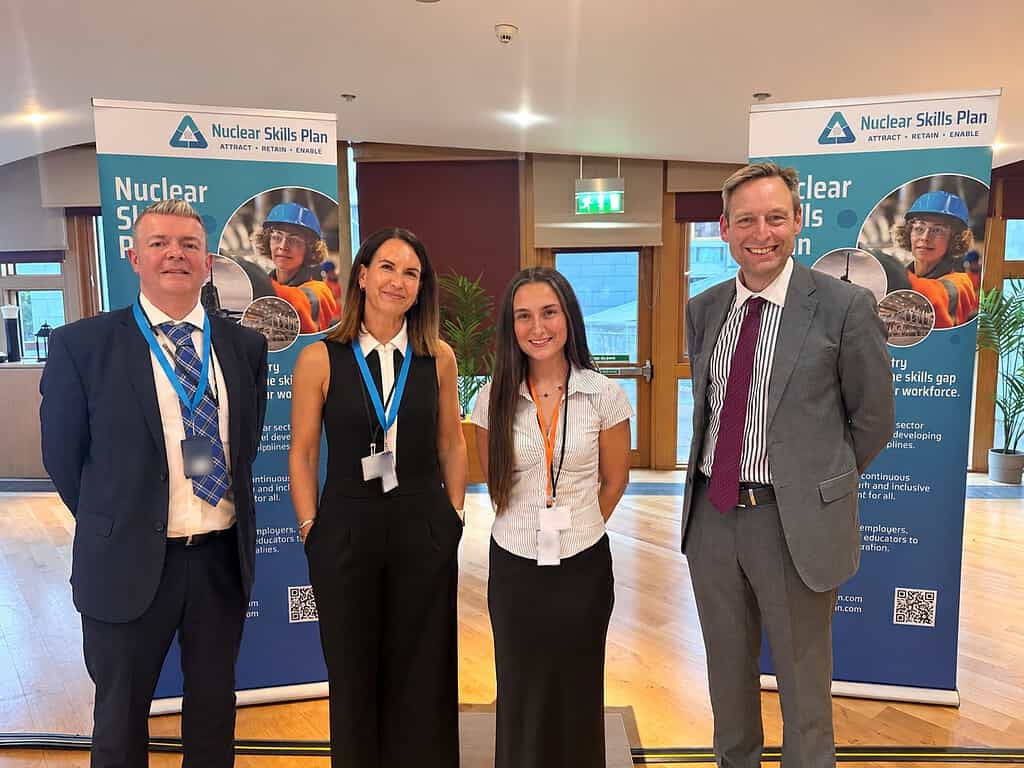
We recently co-chaired a showcase event at the Scottish Parliament to highlight the work of the Scotland Nuclear Skills Hub, a collaborative initiative helping to strengthen Scotland’s nuclear workforce and support delivery of the UK’s 10-year Nuclear Skills Plan.
Babcock and Nuclear Restoration Services (NRS), co-chair the Hub which is helping to bring together industry, academia, skills organisations and government to ensure Scotland has the skilled workforce needed to support major defence and civil nuclear programmes, while creating opportunities for future generations across the country.
The event welcomed MSPs, industry leaders, colleges, universities, STEM organisations and skills partners to explore how Scotland can maximise the opportunities presented by growing investment in defence and civil nuclear programmes.
Scotland’s nuclear sector currently supports around 7,000 direct jobs and plays a significant role in communities across the Central Belt, Highlands and Islands. As demand for skilled workers continues to grow, the Scotland Nuclear Skills Hub is helping coordinate efforts to develop talent, expand access to careers and retain critical skills within Scotland.
Attendees heard from political and industry leaders and experienced interactive exhibits showcasing career pathways, skills development programmes and innovative technologies being used across the nuclear sector.
Liam Kerr MSP, Scottish Conservative Shadow Cabinet Secretary for Energy, who sponsored the event, said: “The opportunity for Scotland is enormous. The growth of the UK’s nuclear sector can create high-skilled, high-paid careers for people across Scotland, while developing expertise that is transferable and valuable across energy, engineering, defence and the wider economy.
“Our challenge is not just to develop that talent, but to create opportunities for people to build their careers and use their skills here in Scotland. The Scotland Nuclear Skills Hub shows what can be achieved when industry, education and government work together to make that happen.”
Debbie Joce, Co-chair of the Scotland Nuclear Skills Hub and Babcock Skill Director, said: “Scotland’s nuclear sector is already making a significant contribution to the economy and supporting communities across the country. The challenge now is ensuring we have the skilled workforce needed to sustain that success and seize future opportunities.
“The Scotland Nuclear Skills Hub brings together industry, academia, skills organisations and government to take a coordinated approach to developing the talent Scotland will need in the years ahead. Through collaboration, we can create opportunities for people across Scotland while helping secure the skills needed to support the sector’s future growth.”
Mark Rouse, Director of the Nuclear Skills Plan, said: “It was fantastic to see such strong engagement at the event, bringing together industry, education, skills partners and government to showcase the progress being made through the Scotland Nuclear Skills Hub.
“Collaboration is at the heart of the Nuclear Skills Plan, and the Scotland Nuclear Skills Hub is playing a vital role in ensuring Scotland has the skills needed for the future. By aligning education, training and industry needs, the hub is creating opportunities for people across Scotland, supporting local economic growth and building the workforce required for the UK’s nuclear programme in the years ahead.”
The Scotland Nuclear Skills Hub supports delivery of the UK’s Nuclear Skills Plan, helping ensure Scotland has the skilled workforce needed for future defence nuclear, decommissioning and civil nuclear programmes, while retaining critical skills and expertise within Scotland.
Through our apprenticeships, graduate programmes and early careers initiatives, we’re already investing in the next generation of nuclear talent. Our role in the Scotland Nuclear Skills Hub builds on that commitment, helping to strengthen the skills pipeline and ensure Scotland is well positioned to seize future opportunities across the defence and civil nuclear sectors and deliver nationally important nuclear programmes for years to come.