
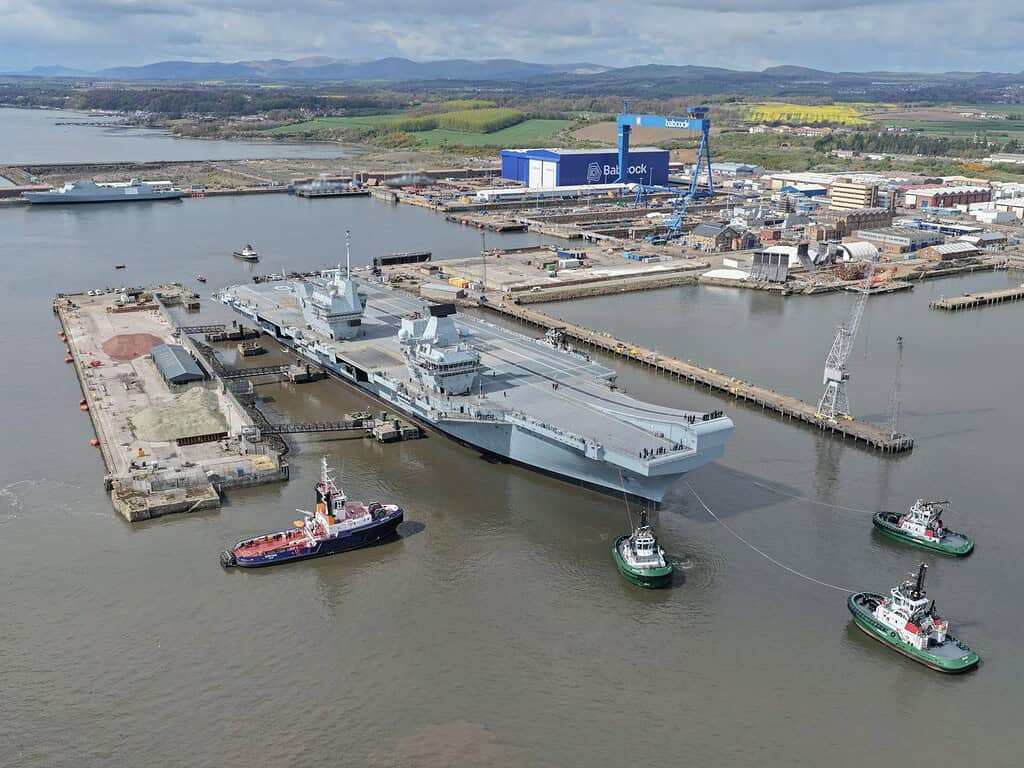
We’ve returned the Royal Navy’s flagship aircraft carrier, HMS Queen Elizabeth, to operational readiness following completion of a planned maintenance programme at Rosyth.
The programme involved thousands of hours of engineering work to inspect, maintain and enhance the ship’s critical systems, including propulsion, stabilisation and wider repair and renewal activity. This work is essential to enable the Royal Navy to deploy to sea when required.
Delivered by a highly skilled workforce of engineers, technicians and project specialists at our Rosyth site – one of the largest waterside manufacturing and repair facilities in the UK – the programme demonstrates our ability to support one of the Royal Navy’s most complex warships. Sustaining this capability supports high-value jobs and helps maintain the specialist skills needed to keep the UK’s fleet operational.
Phil Craig, our Managing Director of Marine Programmes, said: “This programme of work ensures that the carrier continues to meet the operational demands placed upon her.
“At a time of increasing global uncertainty, the availability and capability of the UK’s aircraft carriers is more important than ever. This milestone reflects both the strength of collaboration and the depth of expertise required to sustain the Royal Navy’s most complex warships.”
At 65,000 tonnes, the Queen Elizabeth-class carriers (HMS Queen Elizabeth and HMS Prince of Wales) are the largest and most complex warships ever operated by the Royal Navy. This maintenance period represented the fourth successful dry docking of a Queen Elizabeth-class carrier at Rosyth in seven years.
HMS Queen Elizabeth will shortly begin a period of sea trials before returning to front-line duties with the Royal Navy, contributing to the UK’s ability to project maritime power and respond to global requirements.